
A unique way
to work
on organizational culture:
design.
Organizational Culture Design is Amploom’s approach to designing meaningful workplace experiences for people, increasing engagement, belonging, and value.
When it is useful to work on culture
An organization’s culture is the operating system functional to achieving its goals.
However, there are endogenous and exogenous factors that force companies to adapt and evolve this system. The main ones are listed below.

The factors determining the need for a cultural redesign are manifold: new work requirements, environmental crises, mergers and acquisitions, performance crises, infrastructural changes, cultural misalignment, engagement crises, generational turnover, and management changes.
The uniqueness of design applied to culture
On one hand, organizational culture is a complex challenge, characterized by interconnected, evolutionary, and often unpredictable dynamics.
On the other hand, Design Thinking provides a series of techniques and tools suitable for analyzing complex problems starting from the people.
For this reason, cultural challenges within organizations fall precisely into this category of complex problems, which Design Thinking not only allows to be addressed as challenges but transforms into opportunities, offering tools to design innovative and people-centered solutions.
In this sense, what appears from the outside as an indistinct set of cultural dynamics can be read through different levels—from observable behaviors to stated values, down to the deepest assumptions.
Design allows these levels to be made explicit and worked on intentionally.

The Double Diamond, the visualization of the iterative Design Thinking approach through divergent and convergent phases. Model proposed by the British Design Council in 2002.
A practical approach: the Amploom framework
Organizational Culture Design is the approach—developed by Amploom—that combines organizational culture and design in a practical form. Its goal is to transform culture from an abstract concept into a designable asset, allowing CEOs, HR, and team managers to read the context in which they operate and intervene intentionally in its evolution.
By combining Schein’s depth of analysis of organizational culture with the movements of convergence and divergence of the Double Diamond, we obtained the Organizational Culture Design Radar. A visualization that scans the existing organizational culture (AS IS) and illuminates the direction toward the desired organizational culture (TO BE), while keeping the people’s experience (Employee Experience) at the center.
Through the Radar, we help every organization work on its own evolution trajectory, starting from the real context, without imposing an ideal cultural model.

Visualization of the Organizational Culture Design Radar and the tools developed ad hoc to support each phase of intervention.
The Radar is not only a useful framework for interpreting a context of cultural change, but it also contains a series of practical tools useful for navigating the context itself.
In working with organizations in transformation, we realized that traditional Design tools were not enough to make cultural elements tangible and observable.
For this reason, we evolved and adapted them, building a system of tools specifically designed to work on organizational culture.
In developing the tools, we included inspirations from multiple disciplines: primarily Service Design and Design Thinking, but also Business Design and Value Proposition Design.
Result: Change Engagement
Working on organizational culture with Design allows people to be involved in the transformation process, accelerating the adoption of new practices.
This approach is what we call Change Engagement.
The result is a more intentional transformation journey, capable of aligning strategic vision, business, and organizational culture.
Discover some transformation stories using the Organizational Culture Design Radar below.
Axera
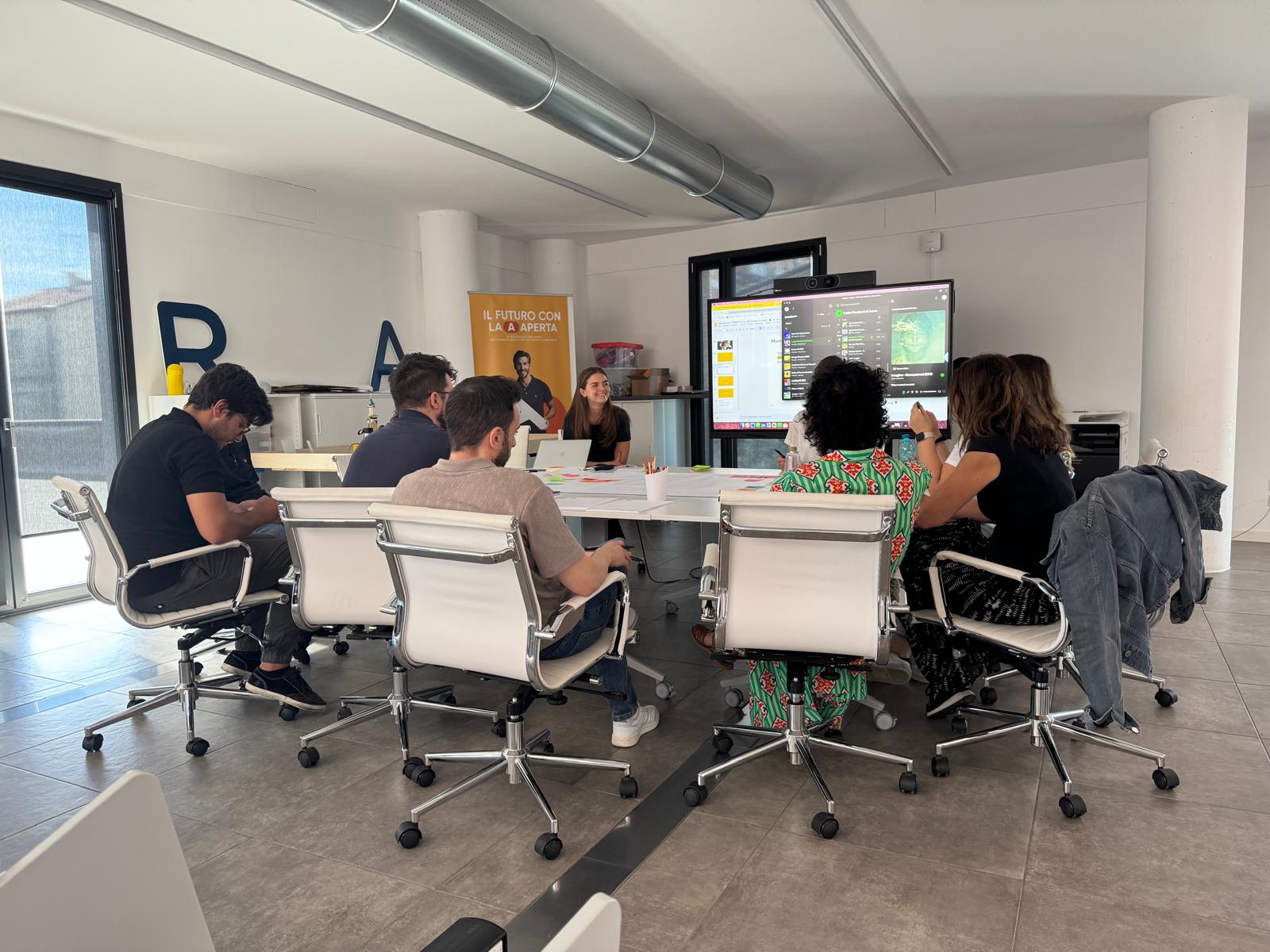
Defining company values by involving the entire workforce
A large-scale co-design journey to identify distinctive company values and related behavioral guidelines

Creating a new organizational culture starting from experiences
A co-design journey designed to involve people in the definition of their culture and create a sense of belonging

Generating cultural change by fostering dialogue between under 35s and leadership
An intergenerational organizational transformation journey where the under-35 workforce designs the company of tomorrow
Want to explore more Amploom case studies? Click here to go to the Projects page.
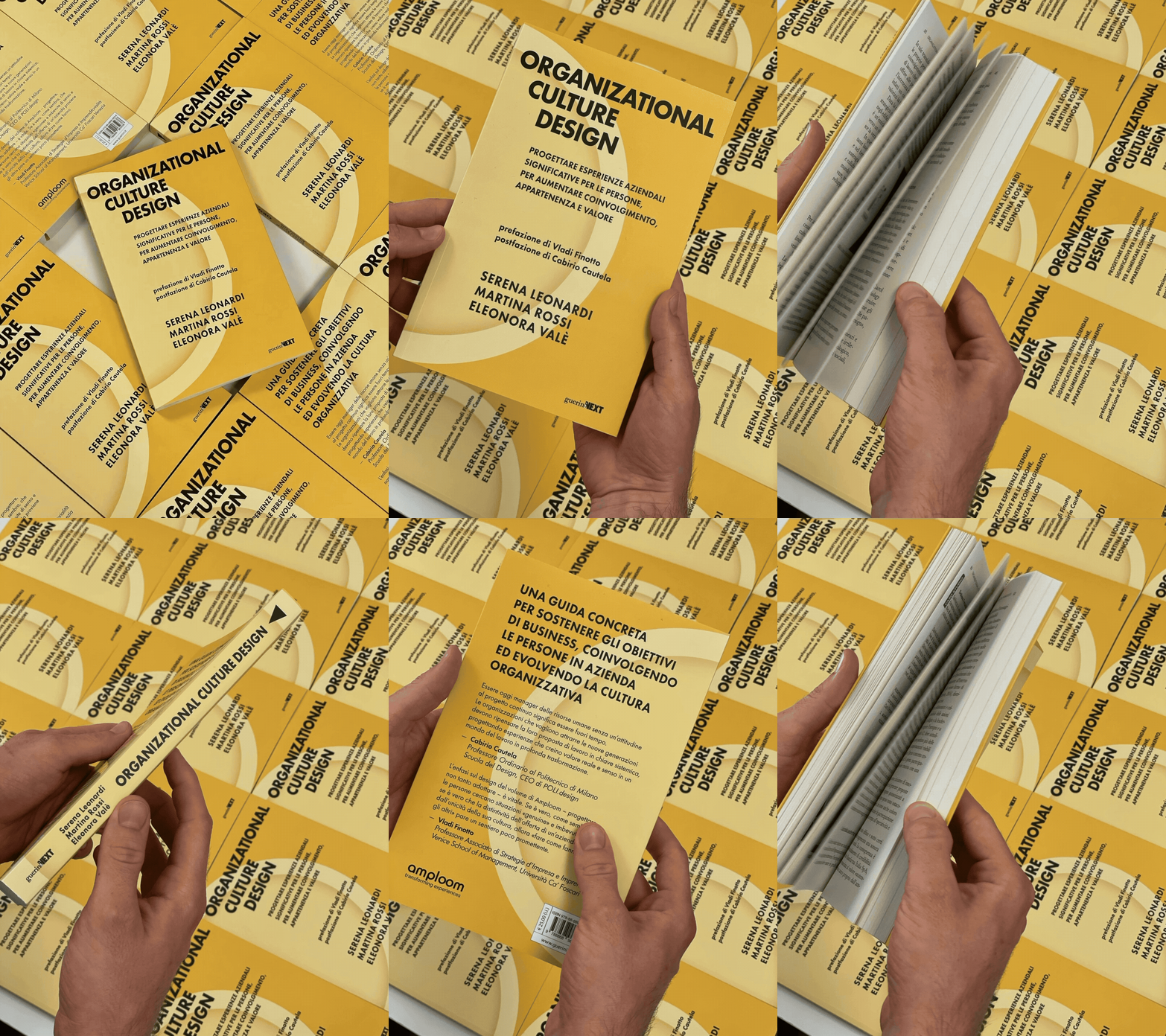
The book Organizational Culture Design
We have condensed our experience into a book that aims to provide CEOs, HR, and team managers with a lens for reading the organization where design becomes a tool to guide change collaboratively and intentionally, involving people and achieving business goals.
The book contains Amploom case studies that recount the projects we have carried out with medium and large Italian and international companies, described in relation to the tools used.

You might be interested in…
The Behavioral Cards are one of the tools included in the Organizational Culture Design Radar.
They are a deck where each card presents a behavioral model and proposes a practical action to avoid—or leverage—that behavior.
They are useful for mapping behaviors in the company, designing new ones, or enriching your knowledge of Behavioral Design.